Why Version Control Exists: The Pendrive Problem
Introduction
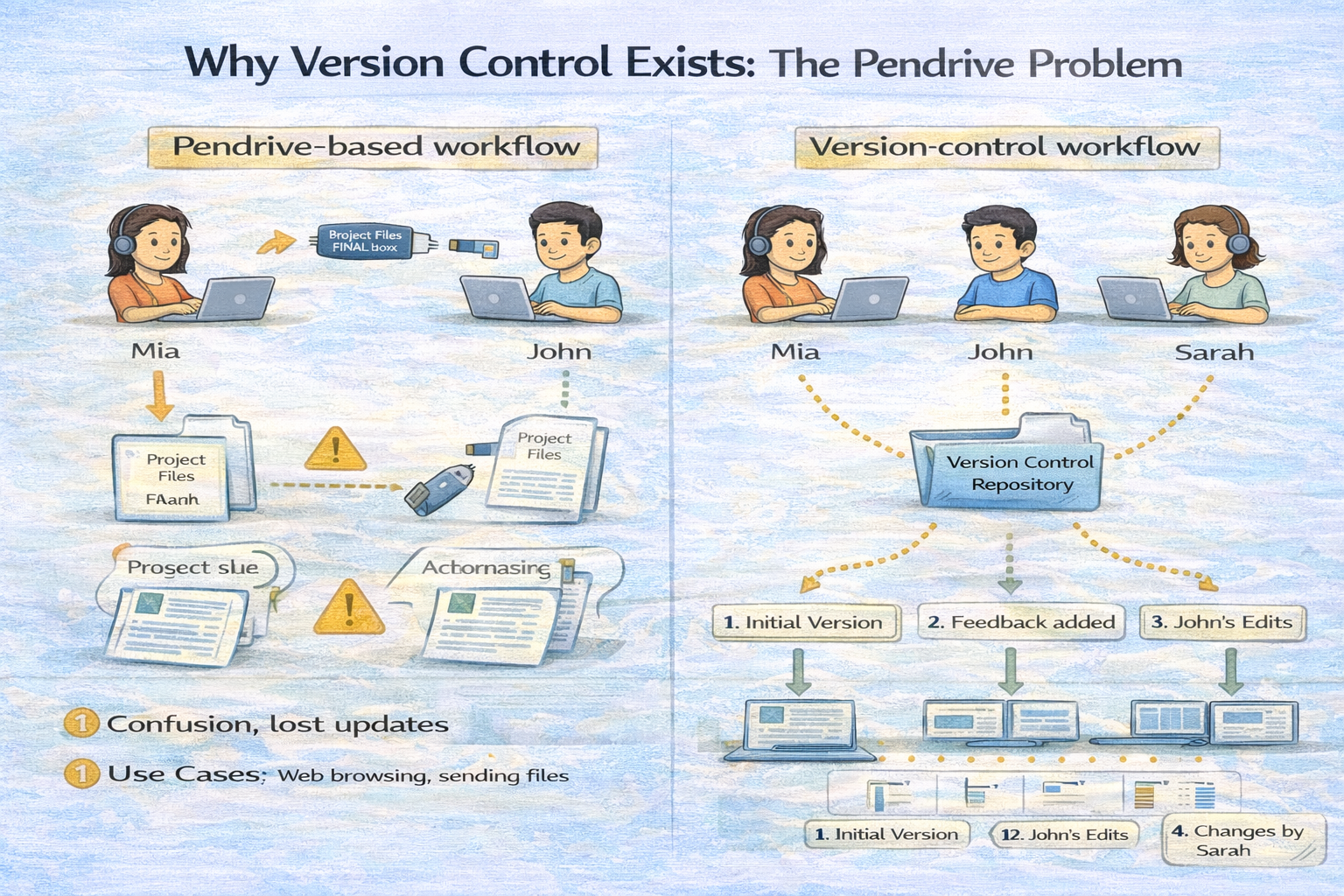
In the early days of coding, managing a project felt less like engineering and more like a high-stakes game of "Who Has the Latest File?"
Have you ever looked at a folder on your desktop and seen files named Report_Final, Report_Final_v2, and Report_Final_REALLY_FINAL_USE_THIS? Before we had modern tools like Git, developers lived in a wild west of manual backups. Here’s why we moved away from the "Pendrive Era" and into the age of Version Control Systems (VCS).
Why Version Control Exists
Version control exists because software is written by humans in teams over time, and humans make mistakes.
At its core, version control exists to answer three scary questions every developer faces:
What changed?
Who changed it?
How do we go back if things break?
Version control became mandatory when:
Teams grew
Codebases became large
Multiple people worked on the same files simultaneously
The Pendrive Analogy in Software Development
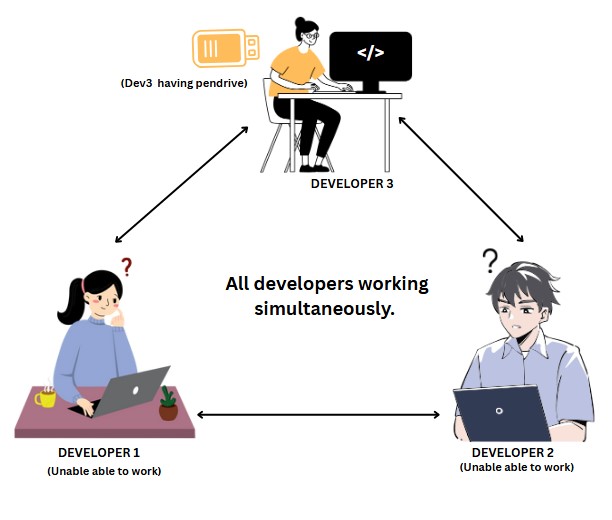
Imagine a team of developers sharing one pendrive.
That pendrive contains the project code.
Whoever has the pendrive → controls the code
Others must wait
Everyone copies files manually
Everyone hopes nothing breaks
This was real life for many teams.
How it worked:
Dev A writes code → saves to pendrive
Dev B takes pendrive → edits same files
Dev C emails a ZIP file with “latest changes”
Someone overwrites something by mistake
Problems Faced Before Version Control Systems:
Before version control systems existed, software development relied on manual methods like pendrives, emails, shared folders, and file copies. These approaches worked only for very small projects. As soon as teams or codebases grew, serious problems appeared.
Folder Chaos
You’ve probably seen folders like:
project/
├── final/
├── final_v2/
├── final_v3_real/
├── final_latest/
├── final_latest_fix/
No one knows which one is correct. Folder names lie.
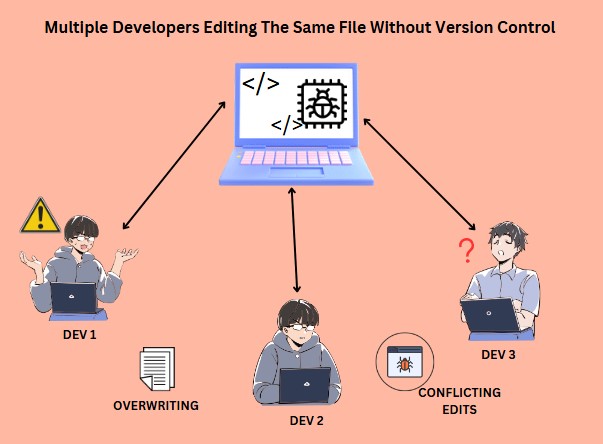
Overwriting Code
Two developers edit the same file.
Dev A copies his version
Dev B pastes his version
One person’s work is silently erased
No warning. No conflict message. Just loss.
Lost Changes Forever
If something broke:
No rollback
No history
No “working version from yesterday”
The only solution: “Can you rewrite what you did last week?”
No Collaboration History
Teams couldn’t answer:
Who introduced the bug?
Why was this logic written?
When did this change happen?
Everything depended on memory and trust.
No Collaboration Support:
Teams struggled because:
Only one person could safely work at a time
Parallel development was risky
Merging changes was manual and error-prone
As teams grew, productivity dropped instead of increasing.
No Accountability
Without records:
Bugs had no clear origin
Fixes had no explanation
Ownership of changes was unclear
This often led to confusion and blame rather than solutions.
Pendrive-based workflow v/s version control workflow:
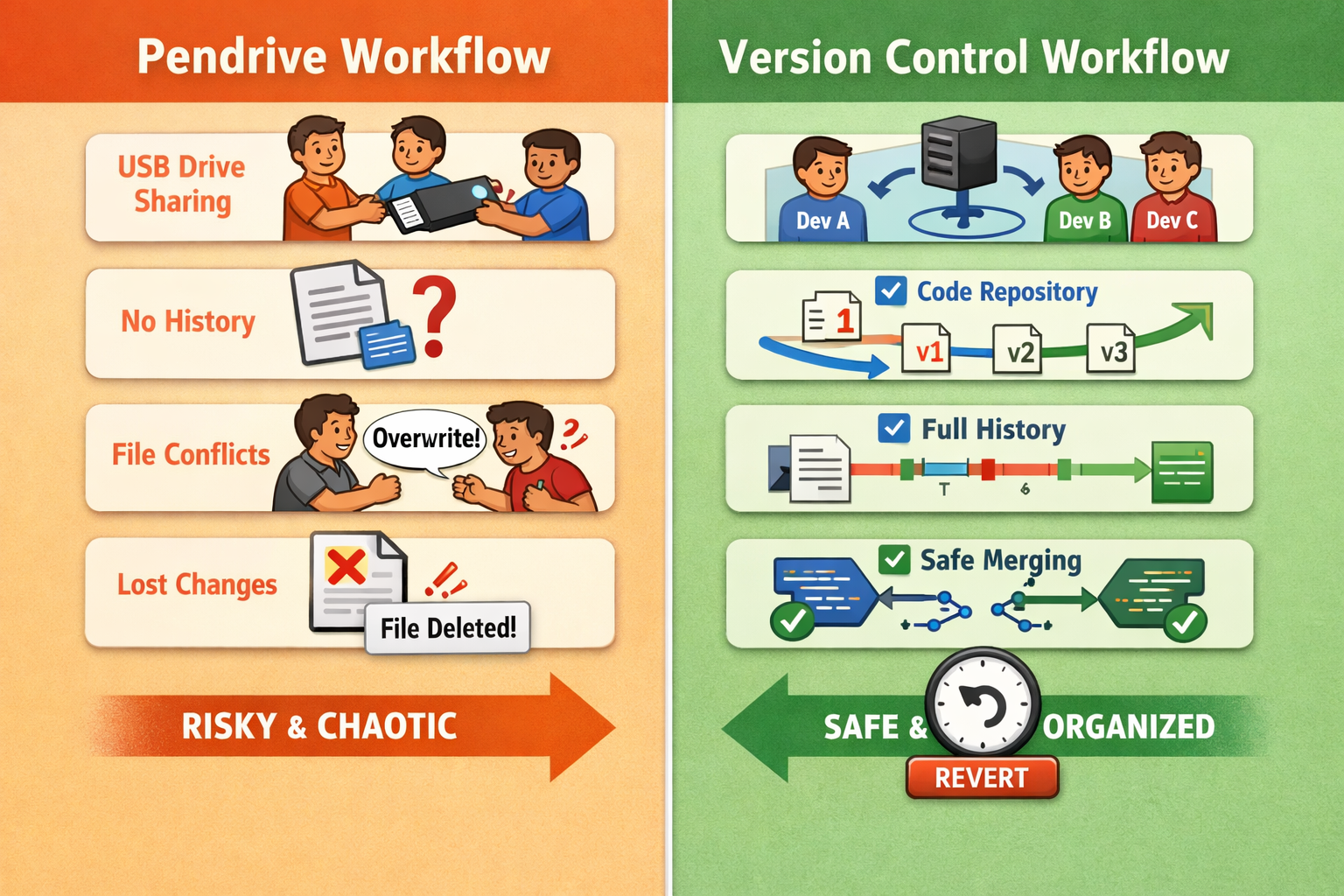
Without version control:
Manual copy-paste
Silent overwrites
Lost changes
No collaboration safety
With version control:
Changes are tracked
Conflicts are detected
History is preserved
Teams work independently and safely
One-Line Definition: Version control exists to track changes, prevent loss, and allow multiple developers to work on the same code safely over time.
In closing
I hope that you’ve found this blog on “Why Version Control Exists: The Pendrive Problem” helpful...!
That's all for today! 😁 You reached the end of the article 😍.
Want more..?
I write articles on princekumar-engineer.hashnode.dev, and also post development-related content on the following platforms: